
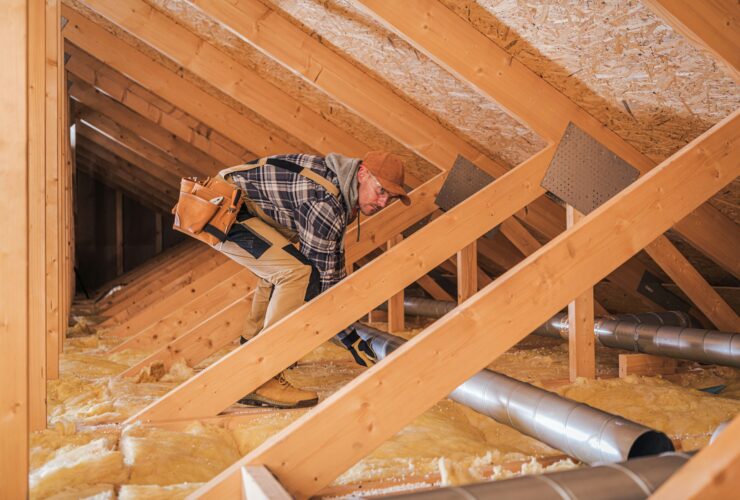
Buffalo attics work hard. They take lake-effect snow, wild temperature swings, and long cold snaps. If the insulation up there is weak, the whole house feels it. Cold bedrooms, drafty hallways, ice dams on the roof, and high energy bills often trace back to an attic that is not doing its job.
Many older homes still rely on thin fiberglass batts tossed between the joists decades ago. Those batts often leave gaps, let air move freely, and lose performance when winter wind blows through the vents. In this article, we compare fiberglass and cellulose insulation in Buffalo, NY, attics so you can plan the right upgrade before the next heating season. We also explain how our team at Energsmart approaches attic projects for Western New York homes.
Stop Ice Dams and Drafts Before Next Winter
Buffalo winters are tough on roofs. Snow piles up, melts a little, then refreezes. When warm air leaks from your house into the attic, it heats the roof deck from below. Snow on the roof starts to melt, then refreezes at the cold eaves and forms ice dams.
Old fiberglass batts often allow:
- Air to leak around wires, pipes, and framing
- Uneven insulation levels from one area to another
- Cold spots that show up as icy edges and dripping soffits
Cellulose upgrades can help create a more even blanket of insulation so the roof stays closer to the same temperature from ridge to eave. At Energsmart, we focus on spray foam and cellulose insulation because they pair well with air sealing and perform well in our local climate.
What Really Matters in a Buffalo Attic
Not all insulation delivers the same comfort once it is in your attic. For our weather, there are a few big things that really matter:
- R-value over time, not just on the label
- Control of air leakage and drafts
- Moisture behavior and attic health
- Installed cost and long-term value
Attic performance affects how your home feels every day. A well-insulated, well-sealed attic can:
- Keep upstairs bedrooms closer to the same temperature as the first floor
- Reduce how often your furnace and AC have to run
- Lower the odds of ice dams, condensation, and hidden moisture problems
The R-value printed on the bag or batt is measured in a lab under perfect conditions. Real homes are different. Gaps, wind moving through vents, and sloppy installation can all lower the true R-value that your family feels.
R-Value Showdown: Fiberglass vs. Cellulose
Both fiberglass and cellulose can reach the R-values that are commonly used in Buffalo attics, such as R-49 or higher. The difference is how they get there and how they perform once cold winds and temperature swings hit.
Fiberglass options include batts and blown loose fill. Cellulose is usually installed as blown loose fill or dense-pack. In general:
- Fiberglass batts have a rated R-value per inch but need perfect cutting and fitting
- Blown fiberglass can reach high R-values but is more open to air movement
- Blown cellulose has a similar R-value per inch and packs together more tightly
In a vented Buffalo attic, winter air flows through soffits and out ridge or gable vents. That moving air can pass through light, fluffy fiberglass more easily than through dense cellulose. This effect, sometimes called wind washing, lowers fiberglass’s effective R-value. Properly installed cellulose helps slow that internal air movement, so its real-world R-value often holds up better.
Over time, both materials can settle some. However, a well-installed cellulose blanket tends to knit together and reduce gaps around joists and framing. This creates a more continuous layer that helps homes meet New York State energy code targets while keeping upstairs spaces more comfortable.
Air Leakage, Drafts, and Ice Dam Prevention
Insulation is not the same thing as air sealing. You can have a thick layer of insulation and still have big air leaks that rob heat and cause drafts. Warm air that escapes into the attic wants to rise and leave the house, pulling cold air in down low. This is the stack effect, and it is a big driver of ice dams and chilly rooms.
Fiberglass batts often:
- Do not seal tightly around electrical boxes, can lights, and plumbing penetrations
- Leave gaps at the edges of framing and near attic hatches
- Allow small convective loops where air moves inside and around the batts
Blown cellulose can be installed to flow around these obstacles and fill irregular cavities more completely. At Energsmart, we often pair detailed attic air sealing with a cellulose upgrade. That usually includes sealing:
- Top plates of interior walls
- Holes around wires, pipes, and bath fans
- Attic hatches and pull-down stairs
When warm air is kept inside the living space instead of leaking into the attic, the roof stays colder and more even. That means less snow melt from underneath, fewer ice dams, and less risk of surprise leaks during late-winter thaws.
Moisture, Mold, and Attic Health Risks
Buffalo homes deal with both winter condensation and summer humidity. Moisture can reach the attic from air leaks, small roof flaws, or even indoor activities like showers and cooking if the house is not ventilated well.
Fiberglass itself does not stop moist air. Air can move through it, hit a cold surface like the roof deck, and leave condensation behind. Since fiberglass is see-through and does not hide much, moisture can sometimes dry, but in other cases it can feed mold on the wood it touches.
Cellulose has a different behavior. Because it is denser, it slows moist air movement and can temporarily absorb some moisture and give it back as the conditions change. That can help buffer swings, but it must be combined with:
- Good attic ventilation
- Solid air sealing between the house and attic
- Correct insulation depth and coverage
If warm indoor air keeps reaching a cold roof deck, any insulation type can be part of a moisture problem. We like to look at the whole system. That means checking for past staining, signs of frost, blocked vents, or other clues, then recommending cellulose or spray foam strategies that help keep the roof structure dry and sound over the long term.
Installation, Cost, and Payback in Buffalo Homes
Every attic starts from a different place. Common upgrade paths include:
- Topping off existing fiberglass with a thick layer of blown cellulose
- Removing old, damaged, or badly installed insulation, then starting fresh
- Using targeted spray foam at problem areas, then finishing the rest with cellulose
Upfront cost depends on attic size, access, prep work, and whether old material needs to be taken out. Proper prep often includes installing baffles at the eaves to keep airflow channels open and doing thorough air sealing before any new insulation goes in.
Many Buffalo-area homeowners see lower heating and cooling use after a professional cellulose retrofit. When your furnace and AC do not have to fight constant heat loss and gain through the ceiling, comfort improves and energy use can drop over the next several winters. There may also be local or New York State incentives, utility rebates, or financing programs that help make cellulose insulation in Buffalo, NY more affordable when the work is done by a qualified contractor.
How to Choose the Right Insulation for Your Attic
So which insulation should you choose? A simple way to think about it:
- Fiberglass can be acceptable in new construction where air sealing is very thorough
- Cellulose is often the smarter choice for retrofits in older homes with irregular framing
- Spray foam plus cellulose can be a strong option in areas with complex leaks or limited height
When deciding, it helps to consider:
- The age and style of your home
- Any comfort complaints like cold bedrooms, drafts, or summer overheating
- History of ice dams, roof leaks, or attic moisture issues
- Future renovation plans that may change ceilings or roof lines
We reco That makes it easier to see hidden air leaks, thin insulmmend a professional attic assessment that includes tools like blower door testing and thermal imaging.ation spots, and any moisture red flags before you commit to a plan. Energsmart uses these findings to design attic solutions built around spray foam and cellulose that fit Buffalo homes and our Lake Erie weather.
Improve Comfort And Cut Energy Bills With Expert Insulation
If you are ready to make your home more comfortable and energy efficient, our team at Energsmart is here to help. We will evaluate your home and recommend the right solution for cellulose insulation in Buffalo, NY based on your goals and budget. Reach out today to discuss your project, get answers to your questions, or request an estimate, and we will guide you through every step of the process. If you prefer, you can also contact us to schedule a convenient time to talk.